96 deep well plate map template
A deep well plate is an archive, and an archive without a map is a box of anonymous liquids. Free downloads and an online maker, no signup, they open in Excel and Google Sheets.
A plate map is the written record of what is in each well: the grid, the groups, the compounds or samples, decided before anything is pipetted and kept for as long as the plate is kept. For deep well plates the map is also the library record: it is what makes a frozen plate worth thawing.
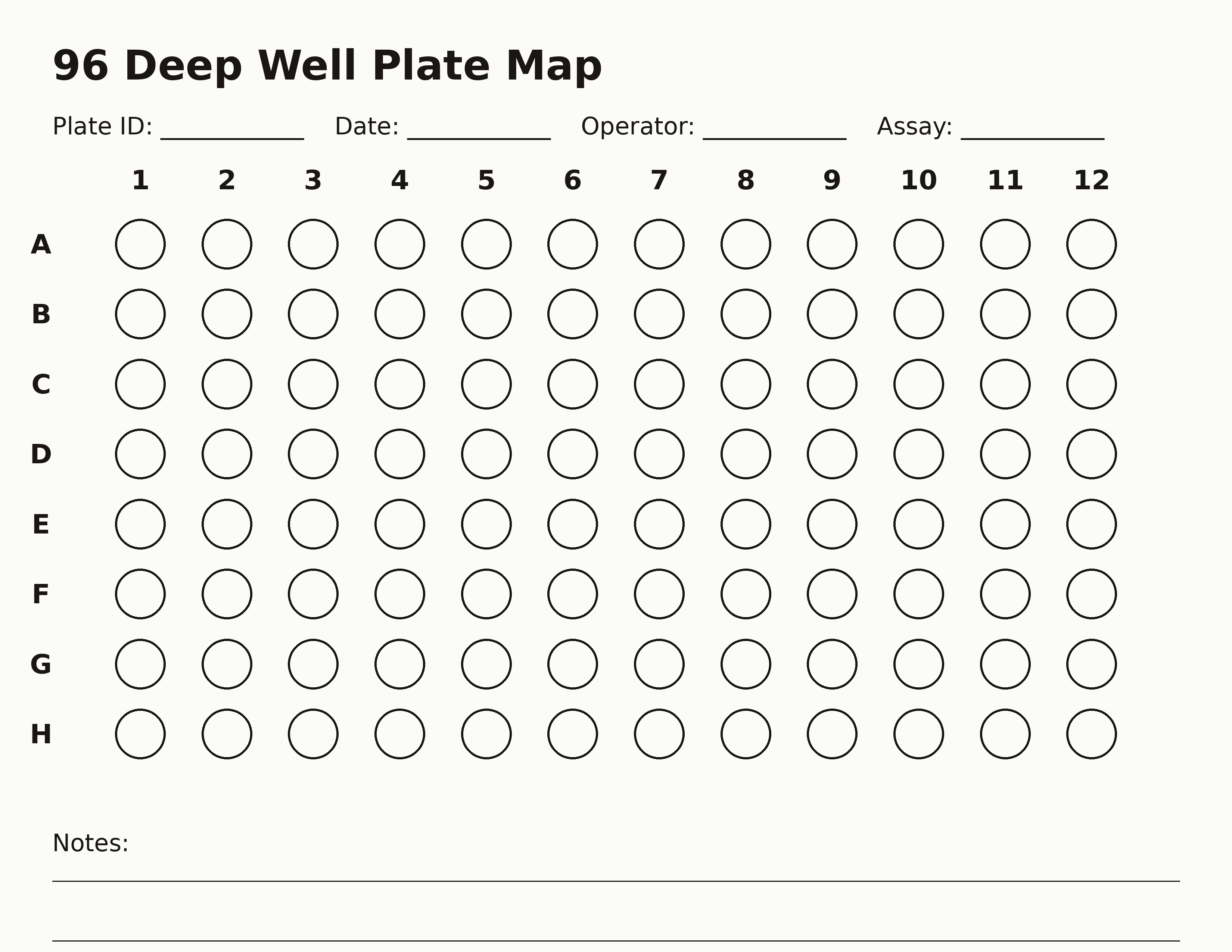
Open the online plate map maker Paint wells by group, then export the finished map as Excel or CSV.
Downloads
Plate map template (Excel, XLSX)
Plate map template (CSV)
Plate map template (printable PDF)
Plate map template (PNG image)
Sample list (Excel, XLSX)
Sample list (CSV)
Why a map matters more for deep well plates
An assay plate's map matters for a day. A deep well plate's map matters for the plate's life, which for a compound library is years and dozens of thaws by people who did not make it. Record the obvious (contents, concentrations, solvent) and the archival (date plated, source plate, freeze-thaw count) on the same document. When the map and the plate separate, the plate becomes waste with good posture: full, sealed, and unusable.
How to use the map
The map file is a grid, rows A to H and columns 1 to 12, with header fields for plate ID, date, operator, and contents. Mark the fixed positions first: controls, standards, and empty wells, before samples go anywhere. The sample list file is the long form, one row per well for sample ID, contents, concentration, volume, and notes, which pastes cleanly into a LIMS, a library database, or an analysis script.
Related guides
Common questions
Is the template compatible with Excel and Google Sheets?
Yes. The map and sample list download as Excel workbooks, and CSV versions sit at the same paths with a .csv extension. Excel, Google Sheets, and LibreOffice open either format directly.
What extra fields does a library map need?
Beyond contents and concentration: the date the plate was made, the source it was plated from, the solvent and its grade, and a running freeze-thaw count. Those four fields decide whether a years-old plate can be trusted, and they cost nothing at plating time.